
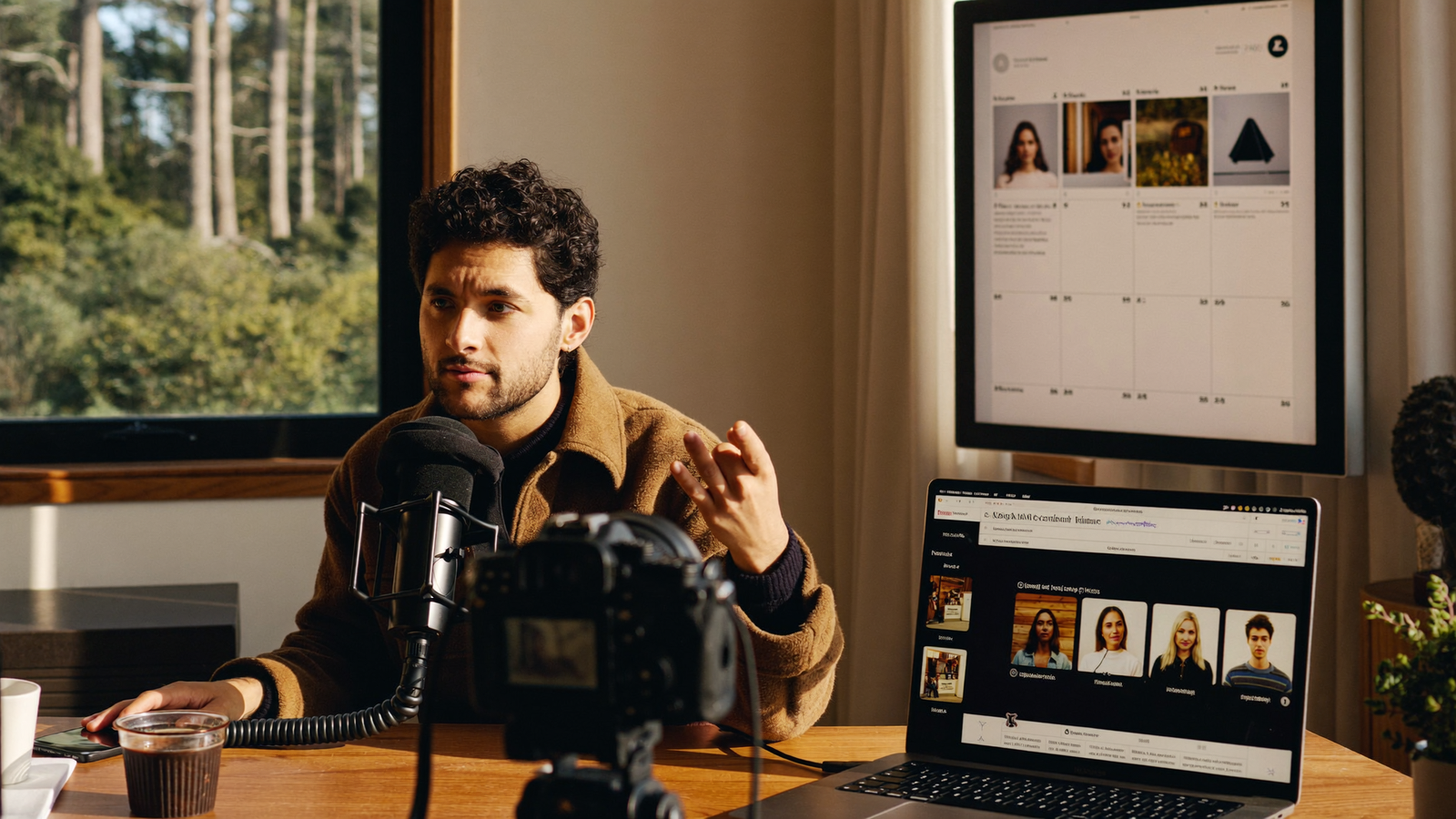
A 45-minute podcast recording, produced well, can populate four weeks of LinkedIn posts, two email newsletters, a short-form video series, and your blog. Most businesses recording podcasts are getting perhaps 20% of that output.
The gap is almost always production, not ideas.
What one recording session actually produces
A single video podcast episode contains more usable content than most marketing teams generate in a month. The problem is extracting it, which takes time and production skill.
When a video-first podcast episode is produced properly, the output breaks into distinct asset categories:
- The full episode (video and audio)
- Four to eight portrait clips (60–90 seconds, vertical format, captioned) for LinkedIn, Instagram, and YouTube Shorts
- A trailer (90 seconds, designed to drive new viewers to the full episode)
- A thumbnail for YouTube and podcast hosting platforms
- A full transcript
- Three to five LinkedIn posts drawn from key moments in the conversation
- A newsletter edition summarising the episode's main insights
- Show notes for the podcast host page and website
That is a substantial content volume from one conversation. According to Content Allies' 2026 repurposing guide, teams running structured repurposing strategies see 3x higher ROI than those who publish a single episode and move on.
The portrait clip is the workhorse asset for B2B
The most commercially useful output from a video podcast recording is not the full episode. It is the portrait clip.
Podmuse's 2026 B2B LinkedIn analysis shows that 66% of LinkedIn's audience consumes content on mobile. A 60–90 second vertical clip, captioned, featuring a specific insight or moment from the episode, is built for that context. It stops the scroll in a way that a link to a 45-minute episode does not.
Captions matter more than most teams expect. Research consistently shows that around 85% of video content on social platforms is watched without sound. A portrait clip without captions loses most of its audience before the first sentence registers. This is not an accessibility consideration alone, it is a basic viewing reality.
70% of new podcasts now publish video clips on social media alongside the full episode. Short-form clips drive up to 60% of new listener acquisition on platforms like YouTube Shorts and Instagram Reels. The full episode is not where most people discover the show; they find it through the clip.
From one conversation to four weeks of posts
The mechanics of a content calendar built from one episode look like this:
- Day one: Core clip from the episode's strongest moment
- Day two: Host reflection post on the key insight from the conversation
- Day three: A carousel or document post expanding on one of the episode's topics
- Day four: A pull quote or short observation from the guest
- Day five: A newsletter or blog recap with a link to the full episode
That is one episode, one week of structured posts. Podmuse describes this five-day stack as the difference between a podcast and a content programme: the same recording, working continuously through the week rather than publishing once and going quiet.
Across a monthly output of two to four episodes, you are producing 10–20 social touchpoints, two to four newsletter editions, and a consistent presence on LinkedIn without generating any additional interview time.
The written layer
Podcast transcripts are underused by almost every organisation that produces them.
A full transcript from a 45-minute episode runs 6,000–8,000 words. That raw material, lightly edited for clarity, becomes:
- A long-form blog post on the episode's central topic
- Two or three shorter posts addressing specific questions the guest raised
- Email copy for a newsletter edition
- LinkedIn article text
- Q&A material for internal knowledge bases or sales enablement
The professional services firms that get most from their podcasts treat the transcript as a draft, not a record. The conversation happened to be captured on video; what comes next can be written.
Where B2B audiences are
Podmuse's research confirms that 51% of UK adults now listen to or watch podcasts monthly. That figure includes video podcast consumption on YouTube, which has become the primary platform for podcast discovery among under-45 audiences. The audiences professional services firms want to reach, including partners at law firms, CFOs at mid-market companies, and senior managers at trade associations, are watching podcast content on LinkedIn and YouTube regularly.
Portrait clips are designed for where those audiences already are. They do not ask someone to navigate to a new platform or commit 45 minutes. They deliver a useful insight in the 90 seconds the person already has available.
The bottleneck is production, not content
Most business podcasts stall at asset creation because the production work is time-intensive. Clipping, captioning, formatting for different platforms, generating thumbnails, writing show notes: done manually, this takes six to ten hours per episode.
The organisations extracting the most from their recordings are not spending more time on production. They are outsourcing it to people who do it efficiently at scale. The recording stays in-house. The assembly goes elsewhere.
The result is a content programme that runs consistently without consuming the team's week.
The bottom line
A podcast recording is raw material. The full episode is one use of it. The portrait clips, newsletter editions, LinkedIn posts, and blog articles are not extras tacked on after the fact. For most B2B organisations, they are where the commercial value of the recording actually lives.
A show with 200 downloads per episode from the right audience is worth significantly more when the guest, their colleagues, and your network encounter the best 90 seconds of it ten times across a month.
That requires a production workflow, not just a recording.
The clips, quote graphics, and written layer described here are all standard deliverables. They are listed with prices on our podcast editing services page.
If you are curious how our production process handles the full asset stack from a single recording session, we are happy to walk through how it works.